
Choosing the correct shoe size is essential for comfort, especially when ordering handmade leather shoes online. A well-fitting pair should feel comfortable around the heel, provide enough room for your toes, and support your feet without unnecessary pressure.
At SS Shoes Maker, we understand that choosing the right size without trying shoes on can be challenging. This guide explains how to measure your feet at home and share accurate measurements when ordering handmade leather footwear.
Why Accurate Foot Measurements Matter
Shoe sizes can vary between brands, styles, and shoe designs. Measuring your feet helps you make a more informed choice instead of relying only on your usual size.
Accurate measurements are particularly useful when ordering custom-made shoes. They can help reduce sizing mistakes and improve the chances of getting a comfortable fit.
What You Need to Measure Your Feet
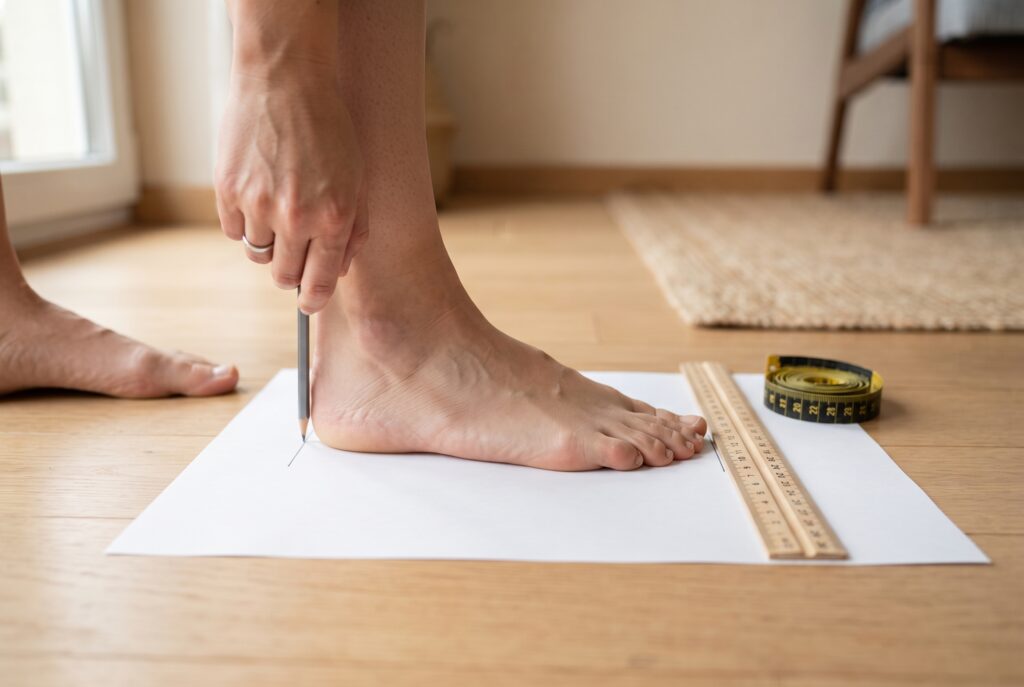
Before you begin, prepare these simple items:
- A blank sheet of paper larger than your foot
- A pencil or pen
- A ruler or measuring tape
- A flat, hard surface
- A pair of socks similar to those you plan to wear with your shoes
Measure your feet later in the day if possible, because feet can expand slightly during normal daily activity.
How to Measure Your Feet Step by Step
Step 1: Place the Paper on a Flat Surface
Put the paper on a hard, level floor against a wall. Avoid measuring on a carpet because it can affect the accuracy of your measurements.
Step 2: Stand on the Paper
Place one foot on the paper with your heel lightly touching the wall. Stand naturally and distribute your weight evenly across your feet.
If possible, ask someone to help you trace your foot while you stand. This usually produces a more accurate outline than tracing while seated.
Step 3: Trace the Outline of Your Foot
Keep the pencil upright and carefully trace around your foot. Avoid angling the pencil underneath your foot, as this can change the outline.
Repeat the process for your other foot.
Step 4: Measure Your Foot Length
Measure from the back of the heel to the tip of your longest toe. Record the measurement in centimetres or millimetres.
For example, if your foot measures 26.5 cm, record it as 26.5 cm. This is only an example, not a recommended shoe size.
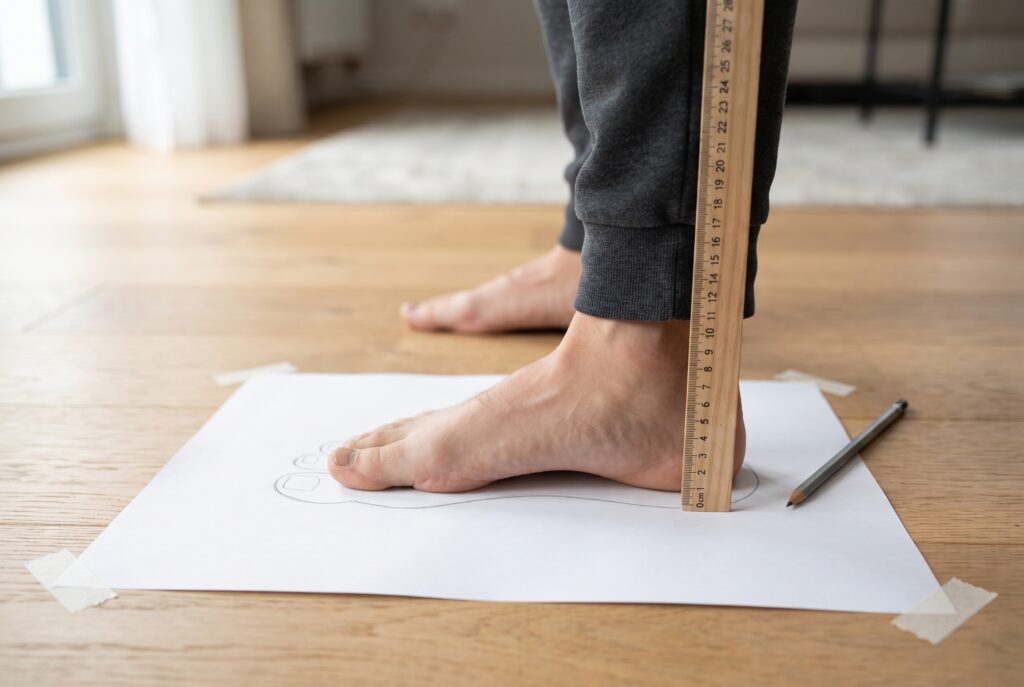
Step 5: Measure Your Foot Width
Measure across the widest part of your foot, usually around the ball of the foot. Record this measurement as well.
Foot width matters because a shoe may have enough length but still feel tight around the sides.
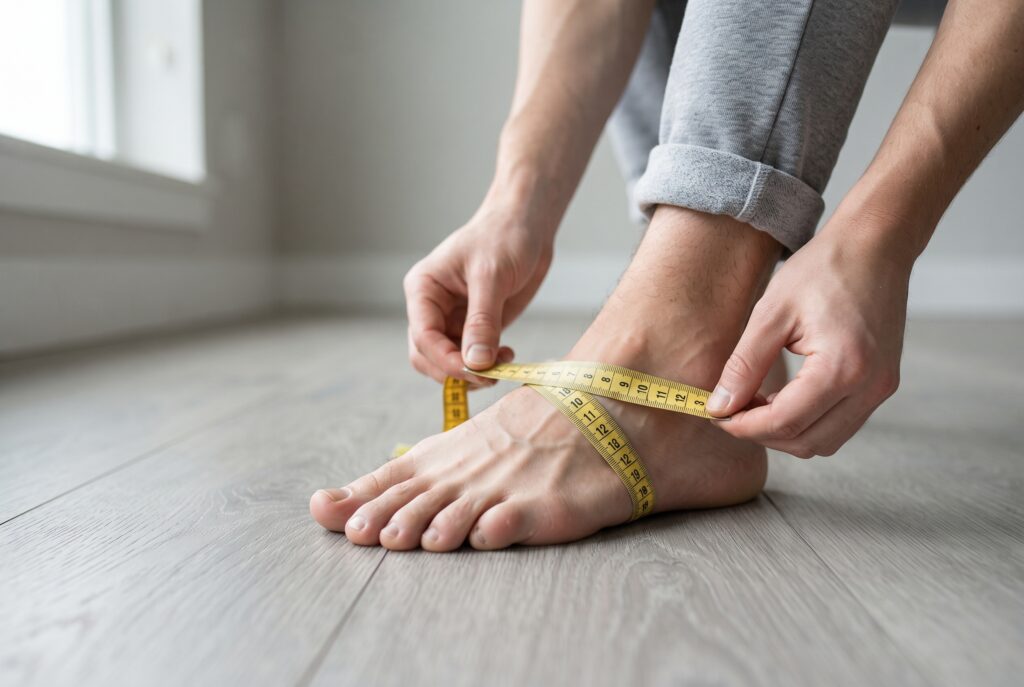
Step 6: Measure Both Feet
Repeat the measurements for both feet. It is normal for one foot to be slightly longer or wider than the other.
When there is a difference, share both measurements with the shoemaker rather than choosing a size based only on the smaller foot.
How to Choose the Right Shoe Size
Once you have your measurements, compare them with the size chart provided by the seller. Do not assume that the same numerical size will fit identically across every brand or shoe style.
Consider these points before ordering:
- Length: Make sure the shoe provides suitable room in front of your longest toe.
- Width: The shoe should not squeeze the sides of your feet.
- Heel fit: Your heel should feel secure without excessive slipping.
- Shoe style: Oxford shoes, loafers, boots, and other designs can fit differently.
- Socks: Consider the thickness of the socks you will normally wear.
A foot measurement is a starting point, not a guarantee of the exact shoe size. The shoe’s last, shape, and construction also affect the fit.
Common Foot Measurement Mistakes
Avoid these common mistakes when measuring your feet at home:
- Measuring while sitting instead of standing naturally.
- Using a soft or uneven surface.
- Holding the pencil at an angle while tracing.
- Measuring only one foot.
- Recording measurements without units.
- Assuming foot length alone determines the perfect fit.
- Choosing a size without checking the seller’s sizing guidance.
Taking a few extra minutes to measure carefully can help you communicate your sizing needs more clearly.
How to Order Handmade Shoes with Confidence
Before placing an order, review the seller’s size chart and custom sizing instructions. If you are unsure about your measurements, contact the shoemaker before completing your purchase.
At SS Shoes Maker, you can explore our handmade leather shoe collection and contact us if you need guidance about sizing or a custom pair.
When requesting custom footwear, provide your foot length and width for both feet, your usual shoe size, and any relevant fit concerns. If the shoemaker requests additional measurements, follow their specific instructions.
Frequently Asked Questions
Should I measure my feet in the morning or evening?
Measuring later in the day can be helpful because feet may expand slightly with normal activity. Measure both feet while standing naturally.
Should I measure both feet?
Yes. One foot may be longer or wider than the other. Record both measurements and share them when requesting custom shoes.
Does foot length alone determine shoe size?
No. Foot width, shoe shape, construction, and the design of the shoe can all affect how it fits.
Can I use my usual shoe size when ordering handmade shoes?
Your usual size is useful information, but sizing can differ between brands and styles. Check the seller’s size chart and ask for guidance if necessary.
What should I do if I am between two sizes?
Do not automatically choose the larger or smaller size. Compare your measurements with the seller’s sizing guidance and ask the shoemaker which option is suitable for that particular design.
Final Thoughts
Measuring your feet carefully is a practical first step toward finding comfortable handmade leather shoes. Record both foot length and width, check the seller’s size chart, and communicate any fit concerns before ordering.
For more information about caring for your footwear, read our guide on how to care for handmade leather shoes. With accurate measurements and clear communication, you can make a more informed decision when choosing your next pair of handmade leather shoes.
Explore our handmade leather shoe collection to find footwear that suits your style and fit preferences.