
Handmade leather shoes are more than everyday footwear. They represent traditional craftsmanship, careful material selection, attention to detail, and the skill of experienced shoemakers. Unlike mass-produced footwear, handmade leather shoes can involve several detailed steps, from choosing the leather to shaping, stitching, and finishing the final pair.
Understanding how handmade leather shoes are made helps you appreciate the work behind every pair and make a more informed buying decision. In this guide, we will explore the traditional shoemaking process, the materials used, and the details that contribute to a well-crafted leather shoe.
What Makes Handmade Leather Shoes Special?
Handmade leather shoes are created through a process that requires patience, practical skill, and careful attention to construction. Depending on the design and production method, some stages may be completed by hand while others may use specialist tools or machinery.
Several features can make handmade footwear distinctive:
- Careful leather selection: The leather is selected according to the shoe’s design, texture, flexibility, and intended use.
- Attention to detail: Stitching, edges, panels, and finishing receive close attention.
- Individual craftsmanship: Skilled shoemakers work through the construction stages with care.
- Variety of designs: Handmade footwear can include Oxford shoes, Derby shoes, loafers, monk strap shoes, boots, and custom designs.
- Personal style: Some makers offer choices in leather colour, materials, design details, and sizing.
The final quality depends on the materials, construction techniques, workmanship, and quality control used to make the shoes.
How Handmade Leather Shoes Are Made
1. Selecting the Right Leather
The first important stage is choosing suitable leather for the design. Different leather types have different textures, thicknesses, flexibility, and finishes.
Common options include calf leather, sheep leather, and goat leather. The most suitable choice depends on the shoe style, desired appearance, durability requirements, and how the leather will be used.
Before cutting begins, the leather should be inspected for its surface quality, consistency, and suitability for the intended design.
2. Creating the Shoe Pattern
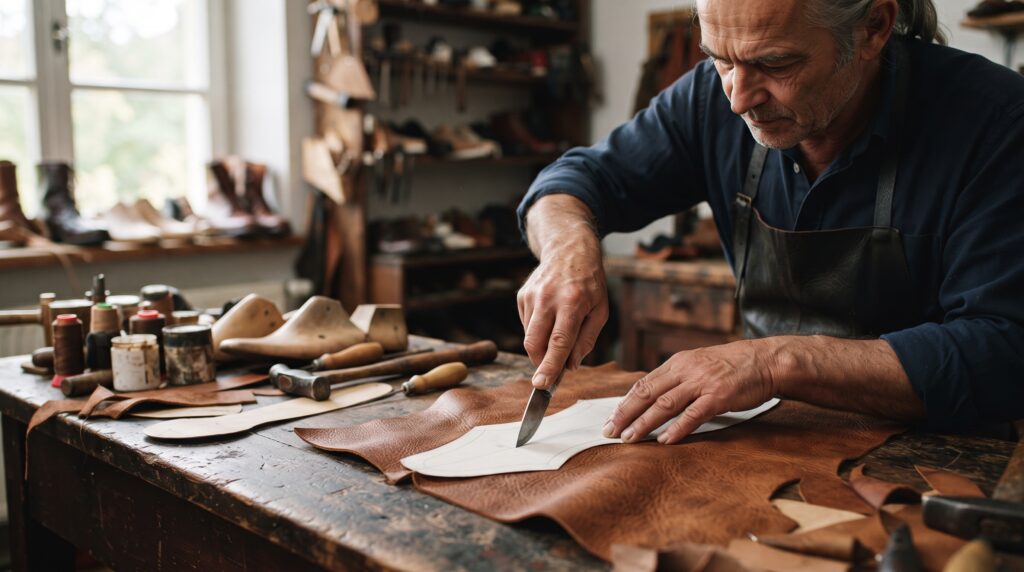
A shoe pattern determines the shape and size of the different pieces that form the upper part of the shoe. The pattern must suit the intended style, whether it is a formal Oxford, a Derby, a loafer, or another design.
Accurate pattern preparation helps the different leather pieces fit together properly. It also helps maintain consistency between the left and right shoes.
3. Cutting the Leather Pieces
Once the pattern is ready, the leather pieces are cut according to the design. This stage requires precision because inaccurate cuts can affect the fit, appearance, and alignment of the finished shoe.
The shoemaker considers the shape of each component and the placement of seams, decorative details, and other design elements.
4. Stitching and Assembling the Upper
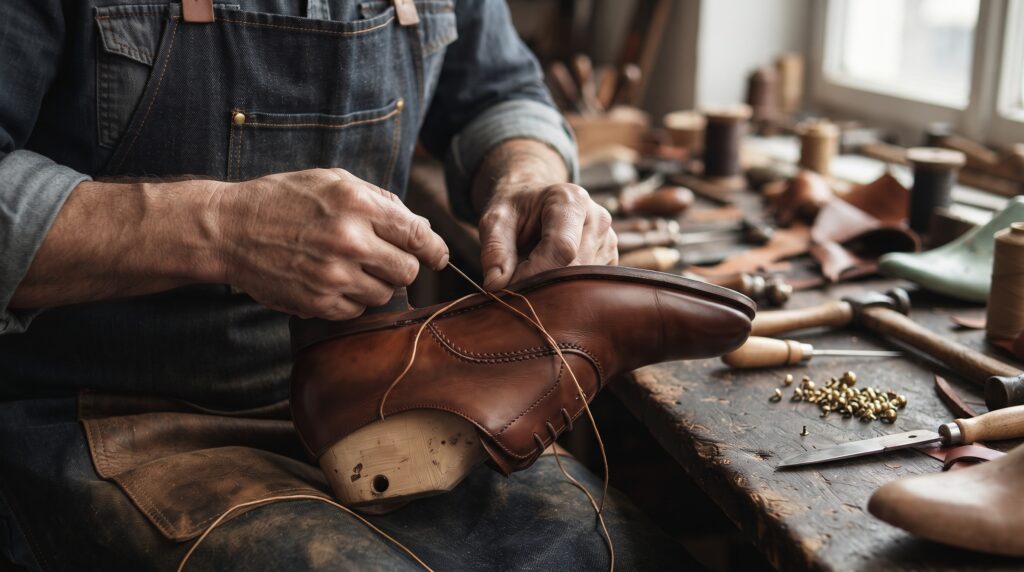
The cut leather pieces are assembled to create the shoe upper. Depending on the design, this may involve stitching several panels together, attaching linings, and adding details such as eyelets, straps, or decorative stitching.
Clean, consistent stitching helps create a neat appearance and supports the construction of the upper. The exact techniques vary depending on the shoe style and the maker’s methods.
5. Shaping the Shoe
The upper is shaped to achieve the intended form. In many traditional shoemaking methods, a shoe last—a foot-shaped form—is used to help shape the upper around the desired shoe profile.
This stage influences the shoe’s overall silhouette, toe shape, and proportions. Careful shaping is important for achieving a balanced appearance and helping the shoe conform to its intended design.
6. Attaching the Sole and Heel
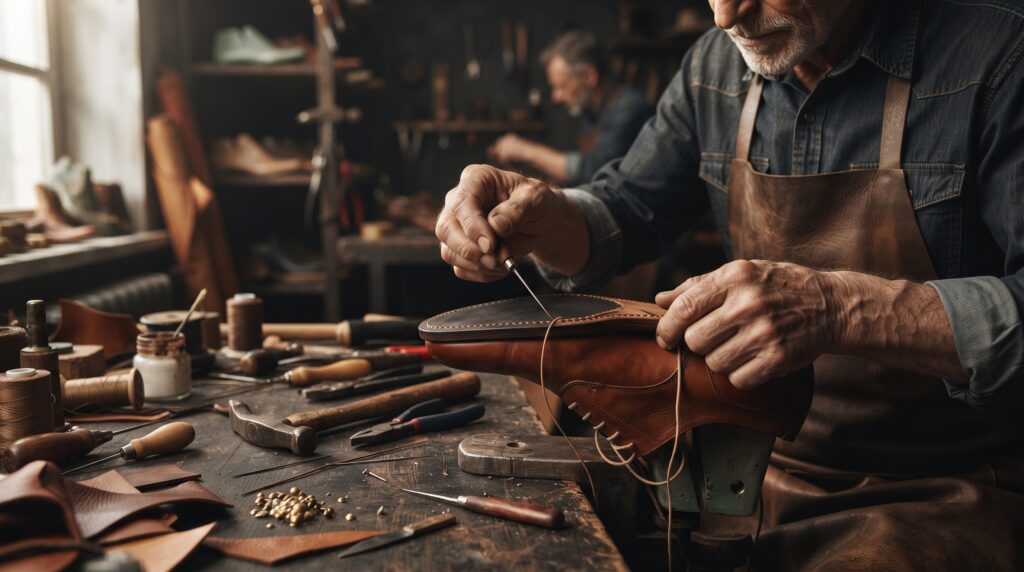
The sole and heel are fitted using a method appropriate for the shoe’s construction. Different footwear designs may use different combinations of stitching, adhesives, and other techniques.
The sole must be aligned correctly with the upper. The heel, edges, and contact surfaces also need careful finishing so the completed shoe looks balanced and is suitable for its intended use.
7. Finishing and Polishing
Finishing gives the shoe its final appearance. Depending on the leather and design, this may include smoothing edges, cleaning the surface, applying suitable finishing products, polishing, and checking the overall presentation.
The process should be appropriate for the specific leather. For example, suede requires different care from smooth finished leather, while patent leather has its own surface considerations.
8. Final Quality Inspection
Before the shoes are packed, the finished pair should be inspected. A quality check may include:
- Checking stitching and visible seams.
- Comparing the left and right shoes for consistency.
- Inspecting the leather surface and finish.
- Checking sole and heel alignment.
- Looking for marks, loose threads, or other visible defects.
- Confirming the order’s design and size details.
Careful inspection helps identify problems before the shoes reach the customer.
How to Recognise Well-Made Handmade Leather Shoes
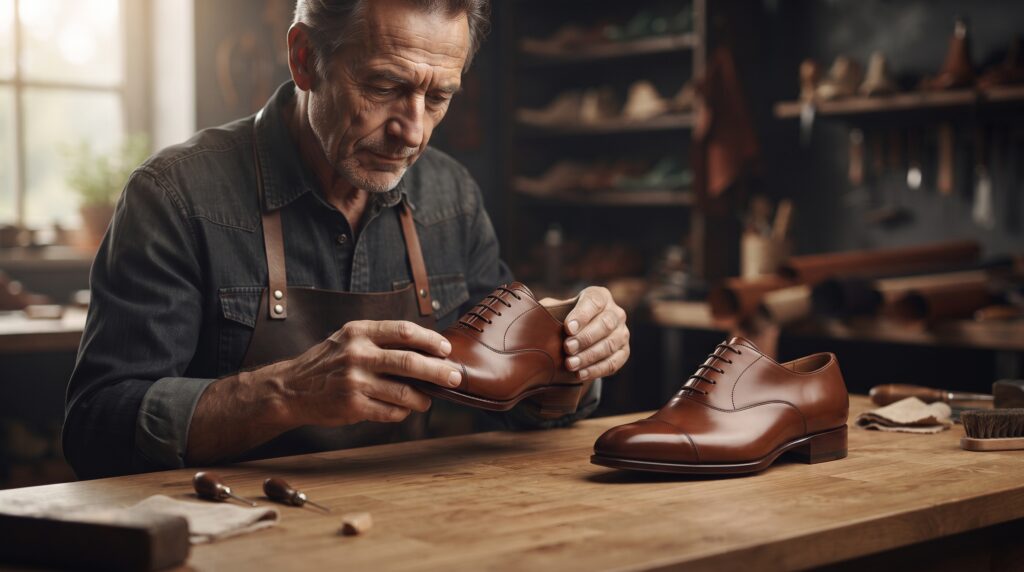
When choosing handmade leather footwear, look beyond the word “handmade.” Pay attention to the construction, materials, finishing, and information provided by the seller.
Consider these points before buying:
- Leather information: Check which leather type is used and how it should be maintained.
- Stitching quality: Look for neat, consistent stitching without obvious loose threads.
- Finishing: Examine the edges, sole attachment, heel, and overall surface.
- Comfort and fit: Use the seller’s measurement guide and sizing instructions.
- Clear product photos: Look for images that show the shoe from several angles.
- Care instructions: Choose a seller who provides guidance suitable for the leather type.
Remember that handmade shoes can vary in construction and quality. The specific materials and techniques matter more than the label alone.
How to Care for Handmade Leather Shoes
Proper care helps maintain the appearance of leather footwear. The best method depends on the leather type and the manufacturer’s recommendations.
For general care:
- Remove dust and dirt with a suitable soft brush or cloth.
- Allow damp shoes to dry naturally, away from direct heat.
- Use leather care products designed for the particular leather finish.
- Store shoes in a dry, ventilated place.
- Use shoe trees where suitable to help maintain the shape.
- Follow specific care instructions for suede, patent leather, or other specialised finishes.
For more detailed advice, read our guide on how to care for handmade leather shoes.
Are Handmade Leather Shoes Worth Considering?
Handmade leather shoes can be a good option for people who value craftsmanship, distinctive designs, and careful finishing. Their value depends on the leather, construction method, comfort, durability, and the maker’s level of workmanship.
Before placing an order, review the product details, available sizes, return policy, and customisation options. If you need a particular fit or design, contact the seller to confirm what can be made.
Frequently Asked Questions
How long does it take to make handmade leather shoes?
The time varies according to the design, construction method, level of detail, and production process. Custom designs may require additional time for measurements, preparation, and finishing.
Which leather is commonly used for handmade shoes?
Calf, sheep, and goat leather are among the options used in footwear. The right choice depends on the intended style, finish, flexibility, and care requirements.
Are handmade leather shoes comfortable?
Comfort depends on correct sizing, shoe shape, construction, materials, and how the footwear fits your feet. Accurate measurements and following the maker’s sizing guide can help you choose more confidently.
Can I order custom handmade leather shoes?
Some shoemakers offer custom designs, colours, materials, or sizing options. Confirm the available choices, measurements, production time, and order terms directly with the seller.
How should I maintain handmade leather shoes?
Clean them gently, let them dry naturally, store them properly, and use care products suitable for the leather type. Always follow the maker’s specific instructions.
Final Thoughts
Making handmade leather shoes involves several stages, from selecting the leather and preparing patterns to assembling the upper, attaching the sole, and checking the final finish. Each stage contributes to the appearance and performance of the finished footwear.
At SS Shoes Maker, we value the skill and attention involved in leather shoemaking. Explore our handmade leather shoe collection to discover different styles, and contact us if you need help with sizing or custom footwear options.